Differentiating a Pet Fountain with Clean/Waste Water Separation
How a North American pet brand built its hydration line on a dual-tank fountain: 4 L clean and 3.5 L waste tanks, FCC ID, leak testing.
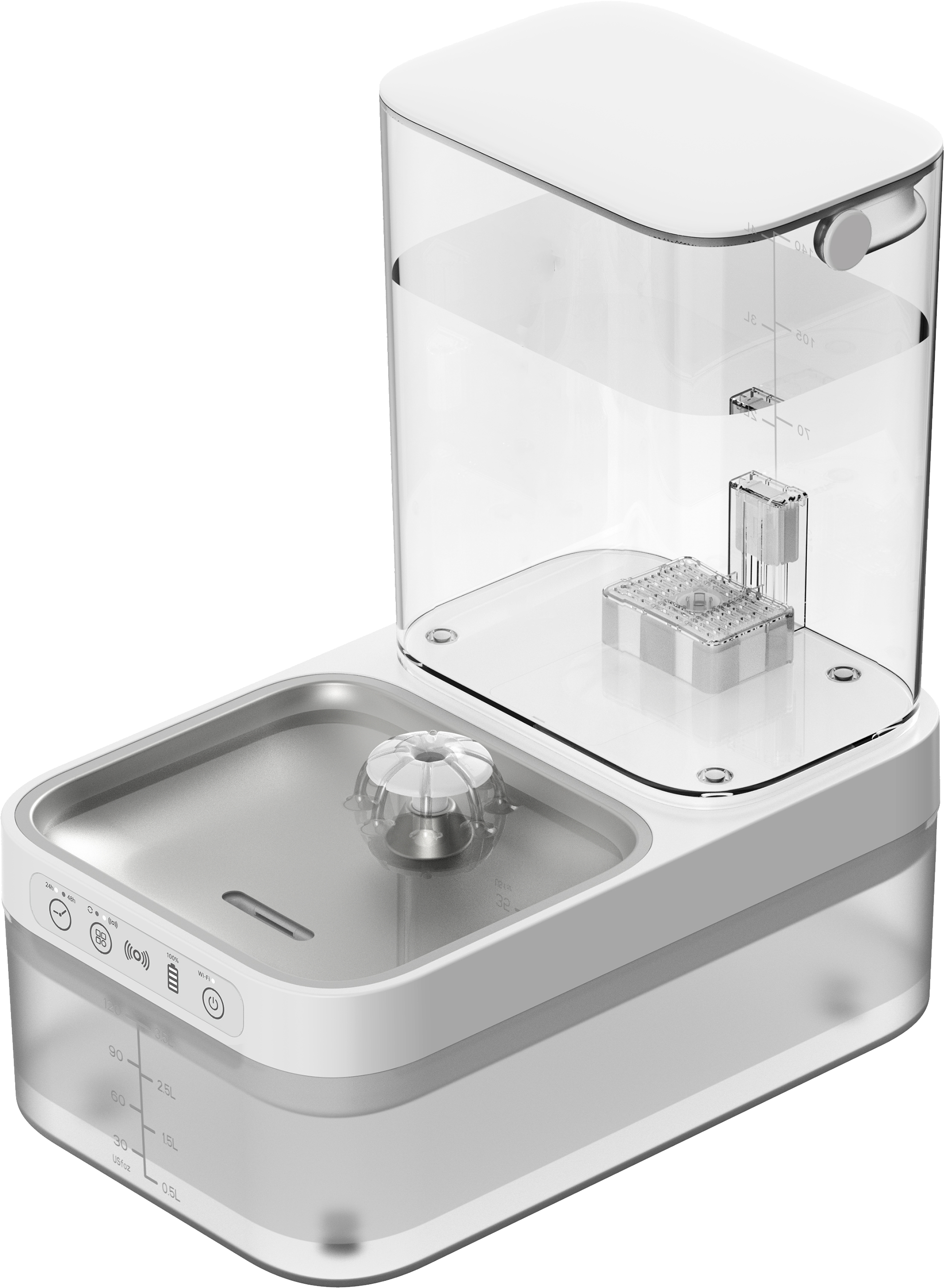
A North American pet brand wanted to escape the commodity single-bowl fountain market. Youwang configured the P006 dual-tank platform — 4 L clean and 3.5 L waste tanks with 24/48-hour automatic drain cycles, sensor circulation and up to 90 days of battery life — and the brand launched with a claim its competitors could not copy without changing their water architecture.
The starting condition
Single-tank fountains compete on price and fail on stale water: the pet does not drink everything, the water sits, and reviews mention slime within weeks. The brand needed a structural answer, not a marketing one.
Constraints
| Market | United States (FCC ID required for WiFi) |
|---|---|
| Claim to support | 15–20 day refill interval |
| Household target | Multi-pet households |
| Certification | FCC ID, plus UL and RoHS files for retail onboarding |
| After-sales | Filter element supply programme |
Measured results
- Refill interval claim supported
- Field-failure control
- Retail onboarding
What we changed, and why
- Architecture as the differentiator The brand selected the P006 platform because the separation is physical: a 4 L clean tank above, a 3.5 L waste tank below, with stale tray water drained on a 24 h or 48 h cycle instead of re-circulated. The claim "separated clean and waste water" is a hardware fact, not a filter promise.
- Compliance for US retail onboarding The WiFi platform's FCC ID, UL and RoHS documentation was packaged for the brand's retail onboarding process, with the radio test scope (2.4 GHz WiFi) stated per file — retail compliance teams reject vague filings, and the specificity prevented onboarding delays.
- Honest battery and app claims Copy was aligned with the actual behaviour: up to 90 days of battery life in sensor mode, and app features requiring mains power. The brand's product page quotes both, which protected review scores after launch.
- Per-unit leak testing Cross-leak between the two tanks is the category's main field failure, so every unit passes a leak and cross-flow test at end of line — the failure mode the brand's previous supplier had treated as a batch-sampling issue.
“They told us which of our claims the hardware could not support before we wrote them. That conversation is why the launch survived its first thousand reviews.”
Founder, North American pet product brand — Confidential — North American pet brand
Where this approach stops working
The dual-tank platforms are drinking-water appliances. They are not feeders, they do not dispense food, and the app functions do not run on battery power alone. Filter elements are supplied as a programme item; the consumer subscription relationship belongs to the brand.
Parts and process
Products used in this programme
Pet Water Fountains
A pet water fountain is an appliance that circulates and filters drinking water for cats and dogs. The Youwang platforms separate clean and waste water into two physical tanks — 3 L to 4 L clean and 1.35 L to 3.5 L waste — with infrared-sensor or continuous circulation modes, WiFi app control, 24/48-hour automatic drain cycles and battery life up to 90 days on the P006, at MOQs from 500 units..
View productLaunching an LDS Robot Vacuum Under a European Retail Brand in 9 Weeks
Read case studyBuilding a Spin Scrubber Accessory Programme Around One Motor Platform
Read case studySend drawings, get a quote in 24 hours
Upload a STEP file and a drawing. You will receive a fixed-price quotation with lead time and a written DFM report — no obligation, and no sales call unless you ask for one.